
how it works
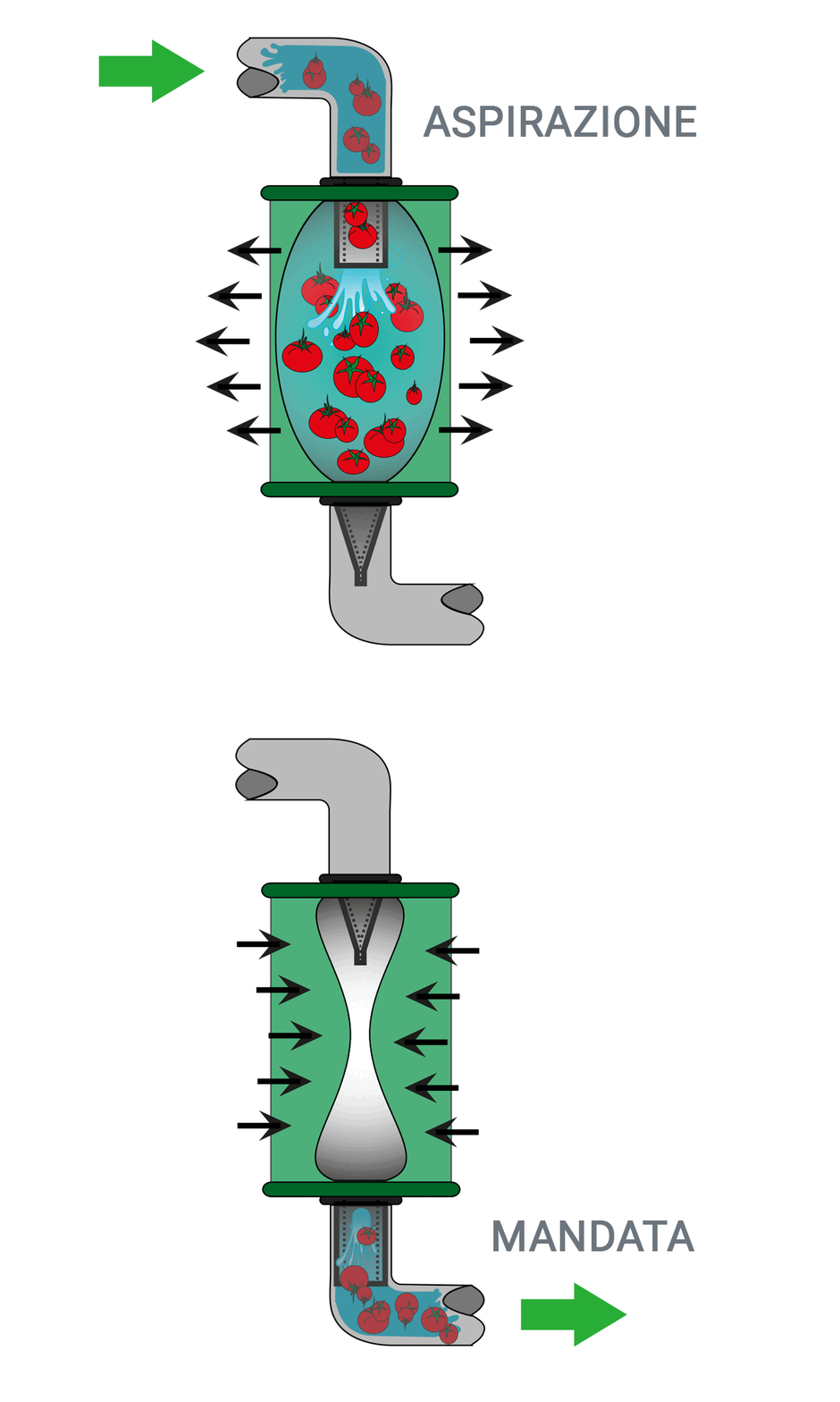
How a positive displacement pump works
The Tarua ® self-priming membrane pump technology
Understanding how a positive displacement pump works is essential to evaluate its performance in industrial applications. This pump working principle is based on the displacement of a fixed volume of fluid, ensuring continuous flow and reliable operation even in demanding conditions.
The TARUA ® system applies this principle through an advanced self-priming pump operation, using a vacuum-driven mechanism enabling efficient suction and transfer of fluids, sludge and solids in demanding industrial applications.
The pump working principle: FULL-PASSAGE MEMBRANE SYSTEM
The TARUA ® pump operates as a reciprocating positive displacement pump designed to handle liquids, sludge and solids through a full-passage architecture.
The large passage, or Flow.Plus, is achieved through the valve and “lung” combination of the TARUA ® reciprocating positive displacement pump.
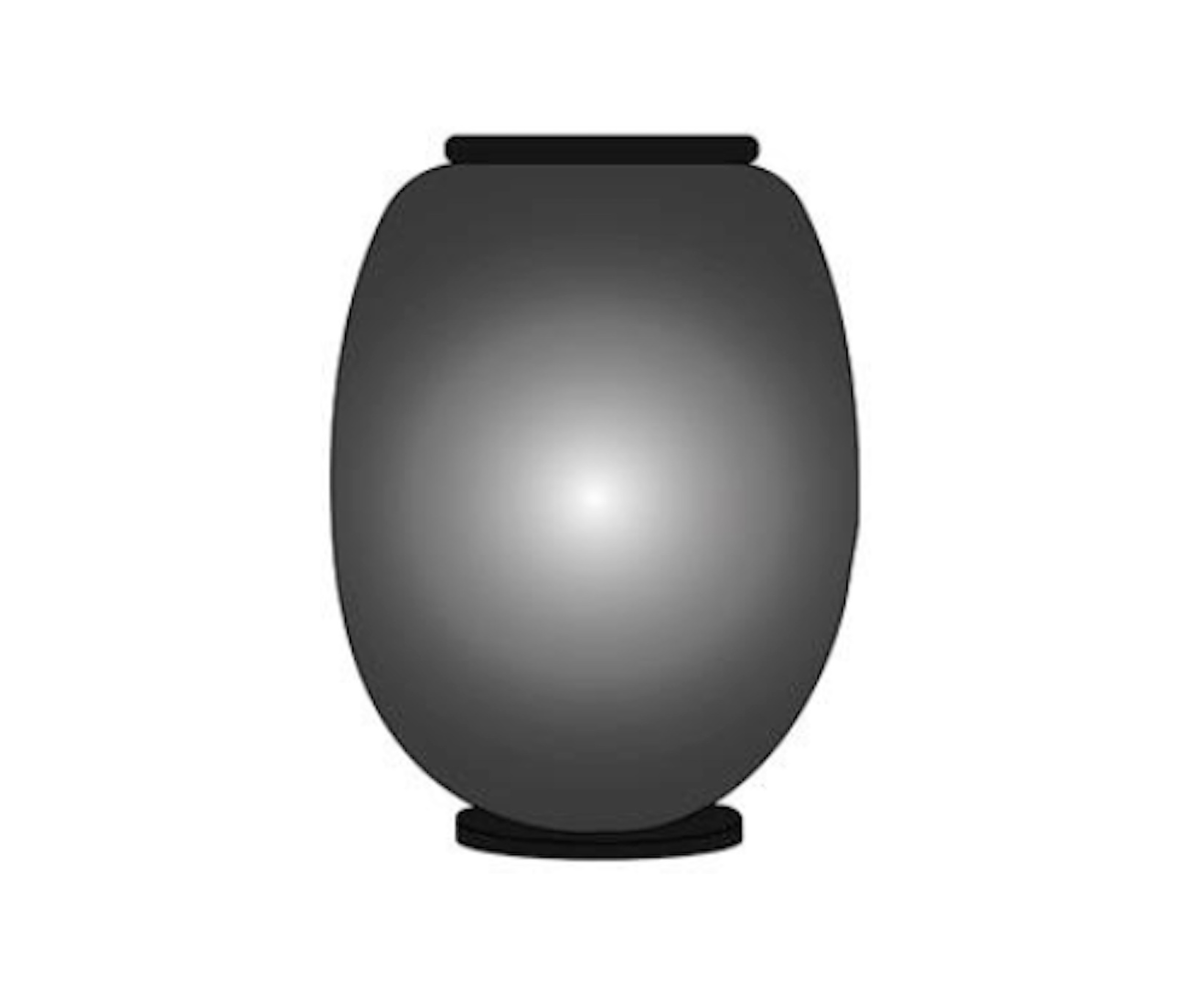
The “lung” is the flexible pumping chamber that expands and compresses during operation, generating the vacuum required for suction and transfer of liquids, sludge and solids.
This component was designed and manufactured by IDEE E PRODOTTI using NBR rubber, as it must be flexible and able to withstand the continuous and rapid compression and expansion movements.
Its diameter is sixteen times larger than the valve diameter, allowing large bodies to pass through and guiding them smoothly towards the outlet during the compression phase.
This design enables the TARUA ® positive displacement pump to transfer liquids, sludge and solids without clogging.
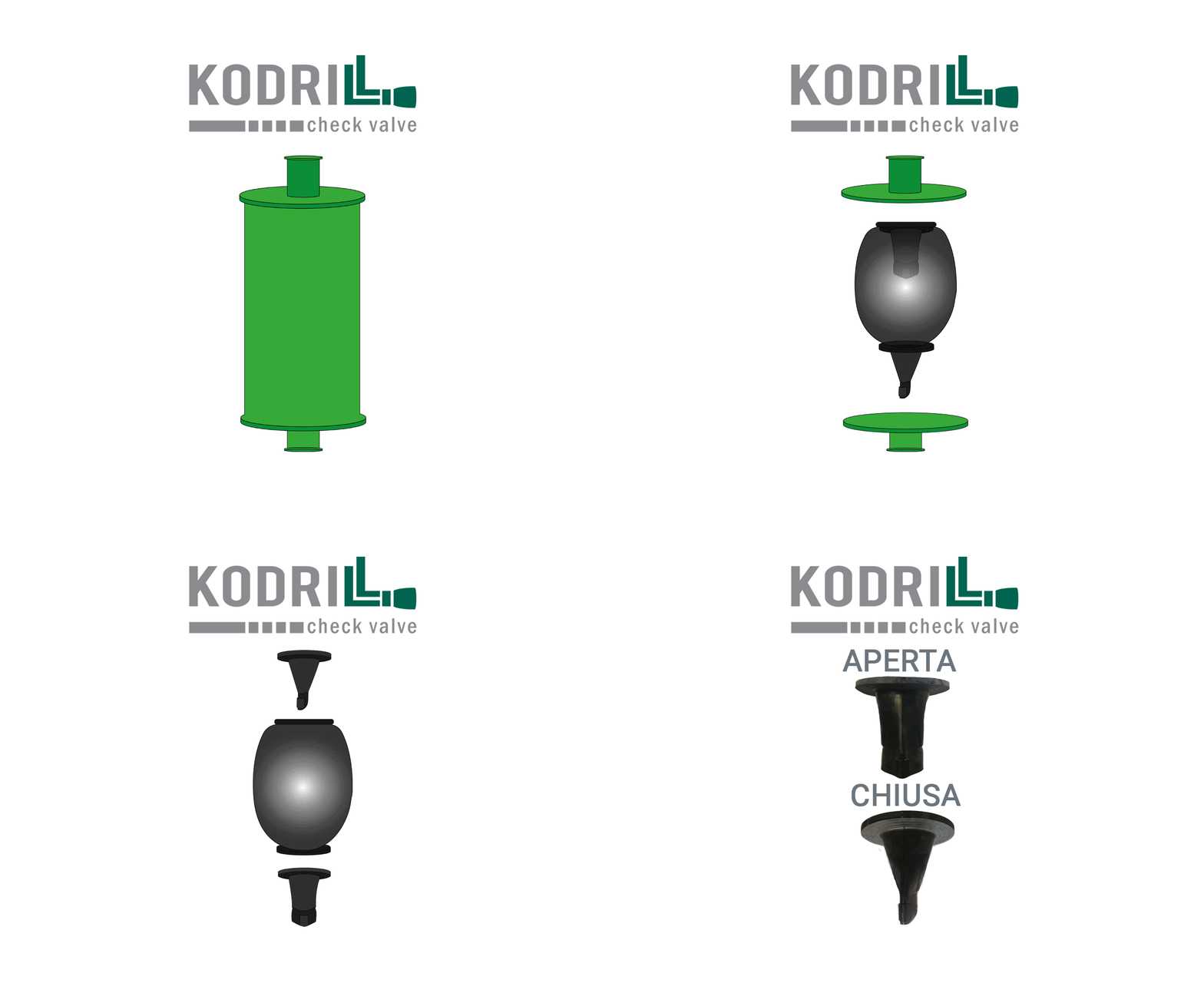
Valve system in positive displacement pump operation
The TARUA ® pump system combines the flexible “lung” chamber with a specially designed valve (designed by IDEE E PRODOTTI and named KODRILL) that regulates the suction and discharge phases of the pumping cycle.
During operation, the valve works in synchronisation with the expansion and compression of the lung chamber, allowing the pump to create a powerful vacuum during the suction phase and to guide the material smoothly towards the outlet during the compression phase.
This coordinated movement ensures that liquids, sludge and solid particles can pass through the pump without obstruction, even when dealing with difficult industrial materials.
Thanks to this valve-lung combination, the TARUA ® positive displacement pump maintains continuous flow, reliable suction capacity and high operational efficiency in demanding industrial environments.
How a positive displacement pump works: the full-passage advantage
Understanding how a positive displacement pump works is only part of the picture. What distinguishes TARUA ® from conventional positive displacement pump technology is the combination of two principles that most pumping systems cannot achieve simultaneously: full-passage flow and continuous self-priming operation.
In a standard positive displacement pump, solids and abrasive materials represent a risk — filters, valves and shredders are required to protect internal components, introducing maintenance complexity and downtime. TARUA ® eliminates this entirely. Its full-passage architecture allows materials as large as the suction port diameter to pass through without obstruction — sand, stones, rags, organic residues and dense sludge included.
This makes TARUA ® a reciprocating positive displacement pump genuinely suited to demanding industrial and environmental applications: wastewater treatment, environmental remediation, civil protection operations and industrial maintenance — wherever conventional pumping systems consistently underperform.
The result is a positive displacement pump that works continuously, requires minimal maintenance and delivers reliable performance across the full range of material types and densities — without filters, without shredders and without interruption.

